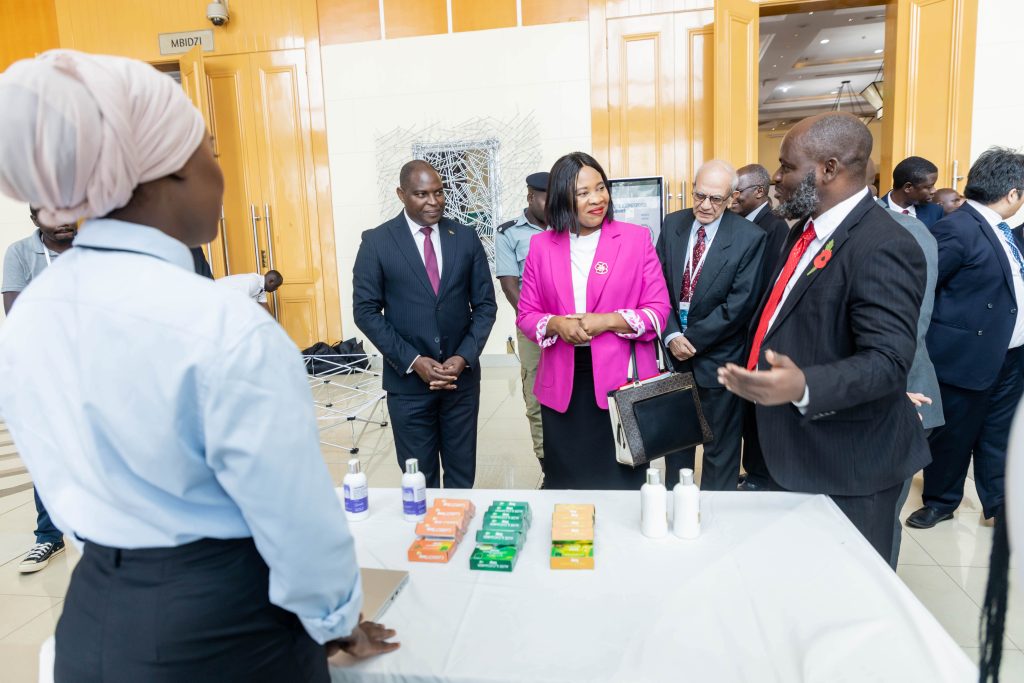
The 18th Technical and Advisory Meeting (TAM) of the Eastern and Southern Africa Higher Education Centers of Excellence (ACE II) Project took place in Lilongwe, Malawi from October 28th to 30th, 2024.
ACE II, an initiative of African governments and the World Bank, established 29 Africa Centers of Excellence (ACEs) in the regional priority areas of Agriculture, Health, Science Education Technology and Applied Statistics. The project aims to strengthen the selected Centers of Excellence to deliver quality post-graduate education and build collaborative research capacity in the regional priority areas.
Over the last nine years the centers have built excellence in higher education through curriculum updates to reflect new knowledge and attained national and international accreditation for academic programs. They have published more than 3,200 research papers in internationally recognized journals, signed over 300 research collaboration MoUs with the private sector to improve the relevance of training and research to solve real problems and generated USD 40 million in external revenue.
The program has enrolled over 7,200 students in Masters and PhD programs and boosted the human resources required to address some of the development needs of the Eastern and Southern Africa region. ACE II is currently strengthening six competitively selected Agriculture Centers of Excellence, five in Malawi and one in Mozambique, to provide high quality training and applied research in agriculture.
While officiating the TAM, Hon. Madalitso Kambauwa Wirima, Minister of Education, Malawi noted:
“The ACEs are timely as they have a critical role to play at this time of climatic changes. They can pioneer technological solutions including in the agricultural sector.” She added, “This project could not have come at a time better than now when Malawi is implementing ATM – Agriculture, Tourism and Mining Strategy for economic development. Thank you World Bank for financing this very important project which we are taking full advantage of.”
She further noted,
“We must provide a policy environment that encourages mutual collaboration between the private sector and the higher education institutions so that both higher education institutions and industry can leverage funding for research, technology and innovation.”
Ms. Maulshree Gangwar who represented the World Bank observed:
“We are very pleased to have RUFORUM on board and are hopeful for their ability to help the ACEs focus their efforts on innovation, entrepreneurship and commercialization, since these are the areas we know RUFORUM can provide the most dynamic opportunities for growth for the ACEs.” Regional Universities Forum for Capacity Building in Agriculture (RUFORUM) is the regional technical partner for the Agriculture ACEs.
Prof. Gaspard Banyankimbona, the Executive Secretary of IUCEA, the Regional Facilitation Unit of the project said:
“Our journey began with a commitment to enhance the quality of postgraduate education and research in critical areas like agriculture to support Africa’s sustainable development. Our focus is on fostering a future where African higher learning institutions, through research and partnerships, can address pressing challenges such as food security and climate resilience while empowering the continent’s youth to drive economic growth through application of knowledge and skills.”
Prof Goolam Mohamedbhai, Chairperson, ACE II Regional Steering Committee, the overall decision making organ of the project, noted:
“The RSC will continue to explore the question of sustainability of the ACEs. How are they being incorporated into existing universities. As long as they don’t lose what they have achieved over the last five+ years. We want to encourage ACEs to collaborate with each other because that was one of the reasons for the regional initiative, to encourage ACEs to collaborate across countries and extend to other regions. We held a meeting in Mauritius to encourage ACEs from the whole of Africa to collaborate with each other and share experiences. There is a possibility of another ACE project in the near future since the idea has not been abandoned because of the enormous success achieved by the ACEs.”
The Secretary for Education, Malawi, Assoc. Prof. Mangani Chilala Katundu, noted:
“There are targets that have to be attained and one of them is to make sure that by December 2025 we attain all the objectives that we had set for these centers. So that whoever looks at the Centers and the reports will say it was worth it and probably it can inform the next set of initiatives of similar nature aimed at ensuring that our universities are not just for training but they are steering productivity as well as development of our nations. Centers are meant to be catalysts with close linkages to industry if we are to see results.”