How do we transform scientific discoveries into messages that inspire decisions, generate change, and engage the public?
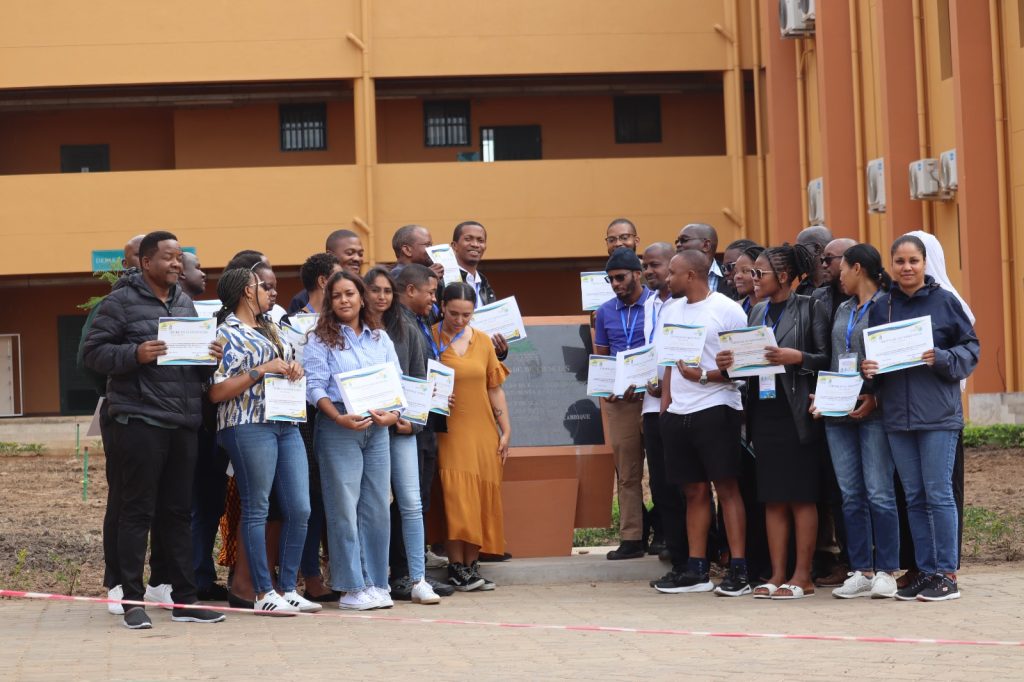
This is the question that motivated the regional seminar on effective science communication held in Maputo from July 28th to August 1st, bringing together 20 scientists from 10 countries in the Western Indian Ocean.
The initiative was hosted by the Regional Center of Excellence in Oil and Gas Engineering and Technology Studies (CS-OGET) at Eduardo Mondlane University (UEM), in partnership with WIOMSA (Western Indian Ocean Marine Science Association). The aim was to empower researchers to communicate science more clearly, accessibly, and with real social impact.
“For communication to be successful, training faculty, researchers, and technical and administrative staff is essential,” emphasized UEM’s Scientific Director, Prof. Dr. Emílio Tostão, at the opening session.
According to Tostão, UEM is committed to transformative science, aligned with its Research and Extension Policy and Innovation, and its Strategic Plan. For the academic, communicating science is no longer a secondary activity, it is an integral part of knowledge production, with real potential to influence public policy, improve lives, and combat misinformation.