Nairobi, 1- 6 September 2025
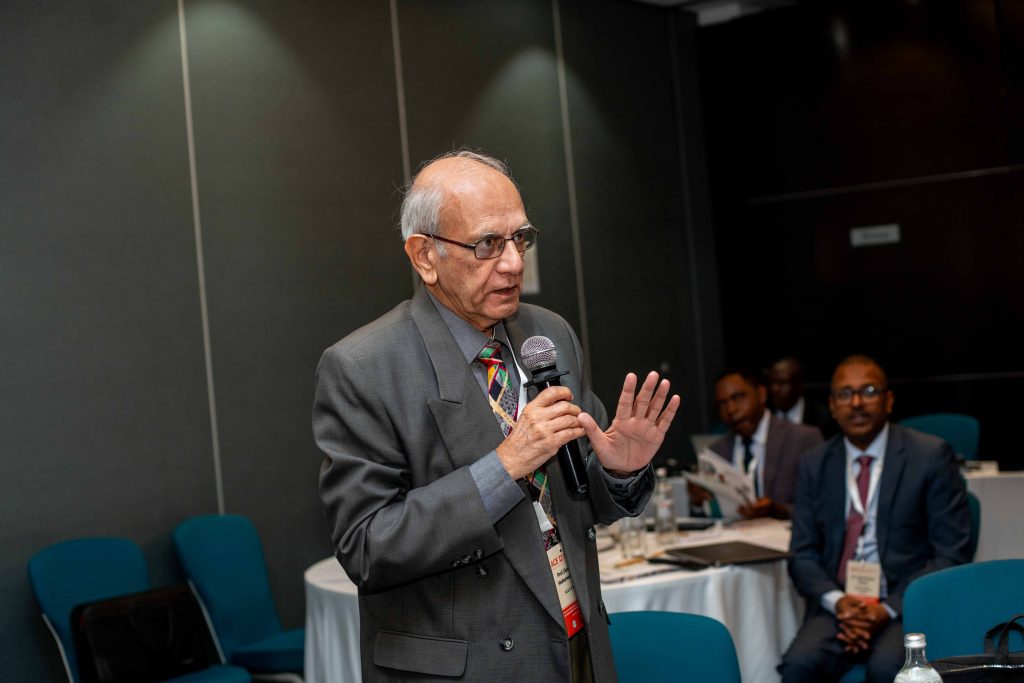
Welcome and thank you for inviting me. I am probably one of the few in this room who has been associated with the ACE2 project since its very inception, as a member of its Regional Steering Committee. Allow me to give you a brief history of ACE2 as we are entering the final phase of the project.
January 2015 – major Workshop in Dar es Salam convened by the World Bank to seek views and guidance on whether there was interest in Eastern & Southern Africa for ACE2 following the establishment of ACE1 2 years earlier in West & Central Africa, which led to the initial establishment of 19 ACEs. The objectives of the ACE Project are:
- Promote regional specialization among participating universities in areas that address specific common regional development challenges.
- Strengthen the capacities of these universities to deliver high-quality training and applied research, especially in STEM areas.
- Meet the demand for skills required for Africa’s development.
- Provide linkages with industry.
Workshop was attended by over 70 participants, comprising government representatives of about 12 countries, university leaders, regional university associations such as AAU, IUCEA and SARUA, private sector representatives, WB representatives, etc. There was overwhelming support for going ahead and it was agreed to use a similar approach as for ACE1.
The governance structure of ACE2 would be:
A Regional Facilitation Unit (RFU) hosted within a regional organisation
A Regional Steering Committee (RSC) comprising mainly of government representatives of the participating countries, private sector representatives & senior academics having experience in higher education in Africa. The RSC would be responsible for appointing a Project Coordinator, ensuring the good performance of the RFU, overseeing the progress made by the ACEs, as well as the overall project performance.
A National Steering Committee with representatives of the Ministry of Higher Education, Ministry of Finance, the VCs of the universities hosting the ACEs, and private sector representatives. Its responsibility would be to provide guidance and oversight of the national ACEs.
The World Bank would provide guidance and be responsible for channelling the necessary funding through the African governments. It would also provide technical expertise when necessary.
The participants left the workshop with great hopes and expectations.
The World Bank followed up and moved quickly, armed with its experience of ACE1.
April 2015: First meeting of the RSC held in Dar es Salam where the IUCEA was selected as the RFU (3 contenders AAU, IUCEA & SARUA). Regional priority areas were also identified.
July 2015: Second RSC meeting in Kampala where the call for proposals for the ACEs was approved. The ToR of the Project Coordinator were also approved.
December 2015: Third RSC meeting in Maputo where the ACEs were selected following a rigorous process of independent evaluation by experts from the educational and academic community, both African and international.
January 2016: A sub-committee of the RSC was appointed to select a Project Coordinator from applications received.
October 2016: The ACE2 Project was formally launched here in Nairobi with 24 ACEs from 8 countries for a period of 5 years.
We have come a long way over the past 10 years. At the 2016 Nairobi launching meeting, at the closing dinner, I mentioned about the complexity of the project to a senior WB representative sitting next to me. She agreed and reminded me that, in 2014, the WB had assessed the overall Project as having Substantial risk (High, Substantial, Moderate and Low). The elements with the highest risks were political and governance, the technical design of the Project, the institutional capacity for implementation, the overall sustainability of the Project and fiduciary aspects of the Project. She added that, in view of its complexity, even if 50% of the ACEs managed to be fully operational through to the end, the Project would be considered a success by the WB.
Ten years later, we have not 50% but 100% success. Admittedly, some ACEs have performed better than others but there were mitigating reasons for this. On of them was the fact that the same criteria were applied to all the ACEs, but the ACEs are not all the same. For example, the ACE in Railways in Ethiopia could hardly be expected to run PhD programmes when it was very industry-focussed and not running Masters programmes. The same applies to the ACEs in Oil & Gas.
Overall, in my view, the project has done exceptionally well, and is one of the most successful and impactful projects in higher education in Africa.
One of the main reasons for its success has been the governance structure of the project, ensuring consultation among all the stakeholders – quite unique in Africa. Also, the commitment of all the actors – the ACEs, the universities, the Ministries, the RFU and IUCEA, the RSC and the NSCs, and of course the World Bank – all of them played their role fully, especially in providing the necessary leadership. There were challenges but they were overcome – through wise leadership and consultation. In fact, leadership, consultation and commitment are the three key words that define the success of the ACE2 Project.
So, where do we go from here? I believe there are 2 clear pathways.
First, ensuring the consolidation and sustainability of the ACEs. These are regional centres which need to continue to play an important role in the development of Africa. I mention consolidation because they have been in existence for a relatively short period. A Centre of Excellence cannot be created in just a few years. A PhD requires about 4 years, an incubation centre to be operational needs several years. Therefore, an ACE should not be regarded as merely the output of a project that disappears at the end of the project. But the World Bank has made it clear that their rules do not allow an extension to provide additional funds to the ACEs. So, this requires the support of governments, the universities, IUCEA and the private sector. And the ACEs themselves need to find ways of seeking additional resources from other funding agencies, and they must collaborate among themselves. What precise formula is adopted for the sustainability of an ACE would depend on each country and each university hosting it.
The second pathway is the creation of additional ACEs. The ACEs have demonstrated their potential of not just promoting postgraduate teaching and research, but equally at improving higher education in Africa. Most of the current countries have expressed a wish to have additional ones, and the World Bank would be approaching countries which have none at present, including my own country, Mauritius, to possibly launch a second phase of ACE2. My wish is that the current ACEs have a role in this second phase. The new ones can learn from the existing ones. There could also be joint projects undertaken between new and existing ACEs. It should be possible for the World Bank to incorporate this element of collaboration between new and old ACEs while designing the new project.
As you, Vice-Chancellors and Centre Leaders, meet during this important workshop, I hope you will use this unique opportunity to discuss among yourselves about the sustainability of the existing ACEs and the possibility of creating new ones.
With these words, I wish you all meaningful deliberations and a very productive workshop.
Thank you.