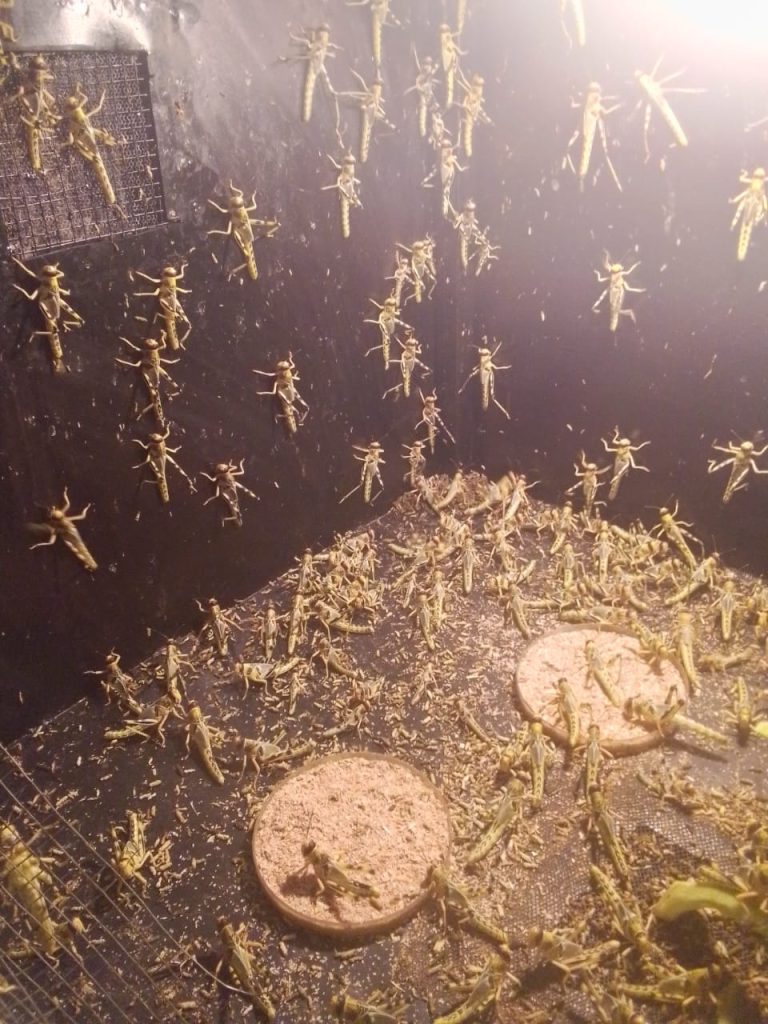
The word “locust” typically conjures images of a biblical plague; a destructive force capable of wiping out crops and devastating livelihoods. But what if this age-old pest could be transformed into a source of income and a powerful solution for malnutrition?
At the Jaramogi Oginga Odinga University of Science and Technology (JOOUST), an ambitious and groundbreaking project is doing just that. One of our most promising graduates from the ACE II MSc in Food Security and Sustainable Agriculture, Mr Joseph Odhiambo Aguk, now a dedicated tutorial fellow, is leading an initiative that began with the sustainable rearing of crickets and has now made a remarkable leap into domesticating the mighty locust.
This researcher’s work began in the lab, meticulously establishing the optimal conditions for rearing crickets to serve as an alternative protein source. But his ambition didn’t stop there. He has now successfully cracked the code for rearing locusts in a controlled, sustainable environment. This breakthrough is a pivotal moment, as it shifts the narrative from pest control to resource management.
The project is now moving from the research bench to the production line. Building on the success of cricket-enriched biscuits, the team is developing a new line of locust enriched food products. These products are currently undergoing a rigorous nutritional analysis to confirm their value before it moves to commercialization.
This is a critical step, and the team is working diligently to secure a patent and all the necessary government approvals. We are also in the process of designing a new structure for the mass production of locusts. This will be the foundation for an entire portfolio of novel, insect-based products for human consumption.
The nutritional power of a plague
The potential of locusts goes far beyond their novelty. Our research confirms that these insects are a nutritional powerhouse. On a dry-weight basis, locusts are exceptionally rich in crude protein, often ranging from 50% to 65%, a value comparable to or even higher than conventional meat sources.
Beyond protein, locusts are a source of healthy fats, including beneficial fatty acids. They also contain essential micronutrients like iron, zinc, and B vitamins, which are crucial for fighting malnutrition and nutrient deficiencies prevalent in many communities.
By harnessing these impressive nutritional components, this project is poised to transform a negative perception into a positive reality. It’s an innovative approach that not only provides an alternative food source but also empowers people with a new, resilient way to generate income. This work is a testament to the fact that with vision and scientific ingenuity, we can turn our greatest threats into our most valuable treasures.