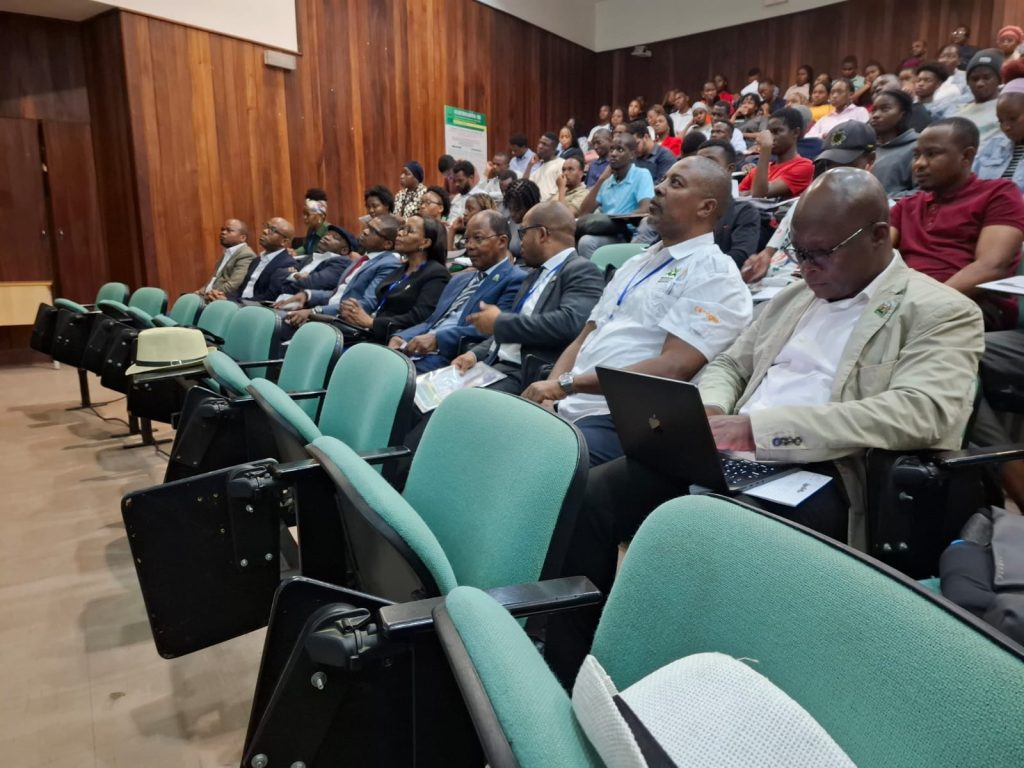
The Centre for Studies in Oil and Gas Engineering and Technology (CS-OGET) of Eduardo Mondlane University hosted the 3rd Oil and Gas Symposium on September 17 – 18, 2025.
The event brought together about 180 participants including academics, researchers, professionals from the oil and gas industry, postgraduate students, and representatives of government-owned companies in the sector to share research findings and discuss recent innovations in geosciences, engineering, technology, economics, and other oil and gas–related disciplines, with a strong emphasis on energy transition challenges, climate change, and environmental sustainability.
Held under the theme “The Challenges of Oil and Gas Exploration in a Global Context of Energy Transition,” this third edition formed part of Eduardo Mondlane University’s 13th Scientific Conference 2025.
The symposium addressed five key thematic areas: (i) Opportunities and risks of oil and gas exploration in Mozambique and globally; (ii) Innovative technologies for sustainable petroleum resource exploitation; (iii) Impacts of the energy transition on emerging economies; (iv) Environmental policies and regulatory frameworks; and (v) Strategies for professional training and knowledge transfer in the sector.
Organized biennially, the event was structured into two main panels and showcased 24 scientific contributions—18 presented orally and six displayed in poster format.
The Symposium featured three distinguished keynote speakers: Prof. Luís Hélder, Director of CS-OGET, who addressed “The Global Challenges of the Energy Transition”; Prof. Ana Sousa from the Instituto Superior Técnico de Lisboa, Portugal, who spoke on “Technical-Economic Viability of CCS in the Energy Transition”; and Dr. José Mendes, President of the Association of Geologists of Mozambique, who presented “Strengthening Skills and Governance for the Sustainability of the Oil and Gas Industry.”
Prof. Luís Hélder expressed gratitude to participants and highlighted the symposium as “an opportunity to share research results developed in oil and gas and related fields.” He emphasized the value of industry engagement, noting that the participation of companies such as Hidroeléctrica de Cahora Bassa (HCB) and Empresa Nacional de Hidrocarbonetos (ENH) enriched the debate, contributed to consolidating technological knowledge in the sector, and allowed the academic community to become familiar with advanced tools widely used in the oil and gas industry. He encouraged the participants to take advantage of the sessions to foster meaningful networking.