By Felix Maulidi
What if a single tree could change lives? In Malawi, the macadamia tree is doing just that. An innovative public-private partnership is reshaping both agriculture and finance in the country’s growing macadamia sector.
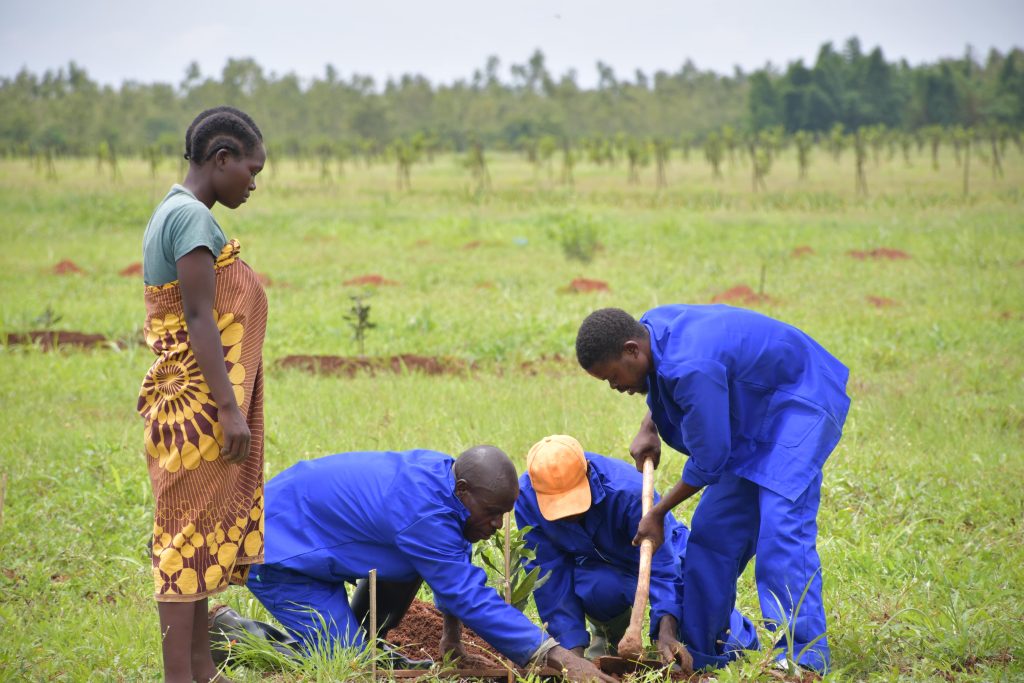
At the center is a collaboration involving the Lilongwe University of Agriculture and Natural Resources (LUANAR), its Centre of Excellence in Transformative Agriculture Commercialization and Entrepreneurship (TACE), GALA Macs Ltd (a leading macadamia producer) NBS Bank (a commercial bank), and Adam Smith International. Together, they have developed a living “laboratory”- an experimental orchard of over 2,500 trees, meticulously irrigated and divided into plots managed by youth.
Agriculture supports more than 80% of Malawians, yet banks have long avoided lending to farmers, citing the sector as too unpredictable, too seasonal, and too risky. But a shift is underway. Through research, data, and practical experience, these partners aim to develop tailored credit solutions for smallholder farmers and youth-led enterprises.
Fifteen young people manage small orchard plots, simulating real-world farm conditions. They scout for pests, monitor irrigation, log costs, and track yields – collecting real-time data that goes straight to NBS Bank’s product designers. A PhD student oversees the process, ensuring insights are grounded in evidence, not guesswork.
“We’ve always had the land and the hands,” says Linda, a 24-year-old LUANAR graduate, “Now, for the first time, we have a chance to access finance that understands our world.”
The impact reaches far beyond a single farm. With the right financial products, smallholders can expand, youth enterprises can flourish, and rural economies can thrive. “This is more than farming. This is our future,” Linda says with a determined smile.
With good planning, innovative research, and a collaborative spirit, agriculture can be much more than subsistence. With proper support, it becomes a force for job creation, economic growth, and social empowerment.