Infectious diseases can have a profound impact on communities. For example, the COVID-19 pandemic has drastically altered our way of life, highlighting the urgent need for early detection of infectious diseases at the community level.
In Africa, it is not uncommon for several infectious disease epidemics to occur simultaneously, calling for an urgent need for their early detection and containment. We, at the SACIDS Africa Centre of Excellence for Infectious Diseases (SACIDS-ACE) advocate the use of digital technology to report infectious disease epidemics, modelling to predict their accuracy, and affordable genomics to detect and genetically characterise pathogens.
Next-generation sequencing (NGS) technologies have revolutionised the field of genomics by making it possible to sequence entire pathogen genomes in a matter of hours or days, rather than years, as was during the sequencing of the first human genome in 2003. NGS has accelerated the pace of pathogen discovery and detection by allowing researchers to sequence many samples simultaneously and at a much faster rate than was previously possible. The Oxford nanopore NGS platform is affordable and deployable to communities.
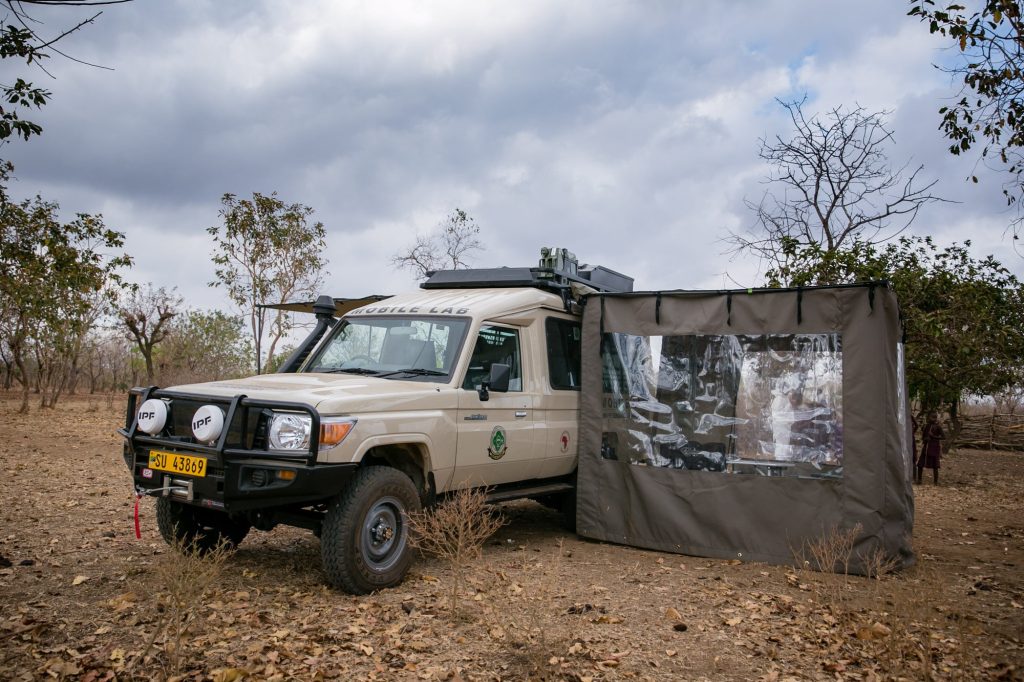
Since outbreaks of infectious diseases can move rapidly and spread across a country, across regions, and at times become pandemics, the best strategy is to stop the disease ‘in its tracks’ as early as possible. For this to happen, rapid detection and accurate identification of the pathogens have to be undertaken to facilitate institutions of correct control measures. To improve the capacity for early detection, identification, and characterisation of pathogens at source (the last mile), SACIDS at Sokoine University of Agriculture has a mobile genomics laboratory.
Mounted on a 4×4 Toyota Landcruiser, it is equipped with Oxford MinION nanopore sequencers, an inverter for providing electricity, fridge/freezer for storage of reagents, Bento Lab for nucleotide amplification, agarose gel electrophoresis and visualization of DNA, and laboratory space. This enables the quick deployment of next-generation sequencing at the last mile where epidemic pockets are reported.
SACIDS has an application for One Health Surveillance called AfyaData. AfyaData analyses all data collected from the field, intelligently sends feedback to the data collector and sends an alert to higher authority officials if any abnormal pattern based on symptoms is discovered in the data collected. A combination of AfyaData and mobile genomics laboratory has assisted in the detection and characterisation of transboundary animal diseases such as African swine fever in domestic pigs and peste des petits ruminants in sheep and goats, and human diseases such as leptospirosis. In recognition of its impact, AfyaData was honoured as a Bill Gates Heroes in the Field
Through the early detection of infectious disease outbreaks in hard-to-reach places, the SACIDS mobile genomics laboratory has enabled us to understand the dynamics of transboundary animal diseases and those posing a threat to global health security. As a result, infectious disease epidemics are confined to the local level, reducing adverse impacts and offering a cost-effective means of infectious disease management. This mobile genomics platform supports the SACIDS theory of change for community-level One Health security, aspiring to achieve high-quality livelihood and well-being of communities. This also contributes to the realisation of the objectives of the OR. Tambo Africa Research Chair for Viral Epidemics, which aims at developing innovative One Health approaches through science and technology driven by genomics, molecular biology and analytical epidemiology to improve the risk management of viral epidemics in Africa.